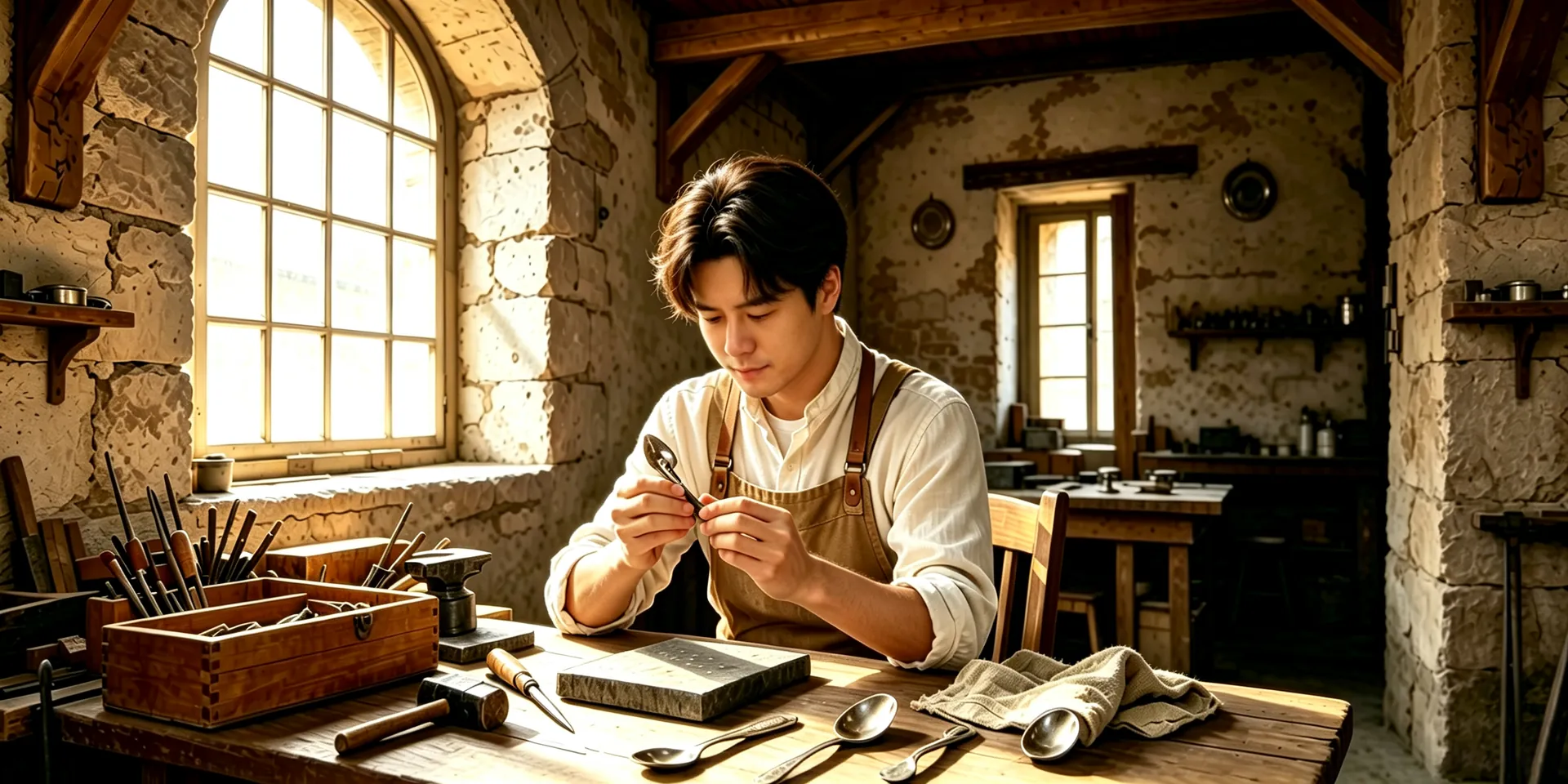
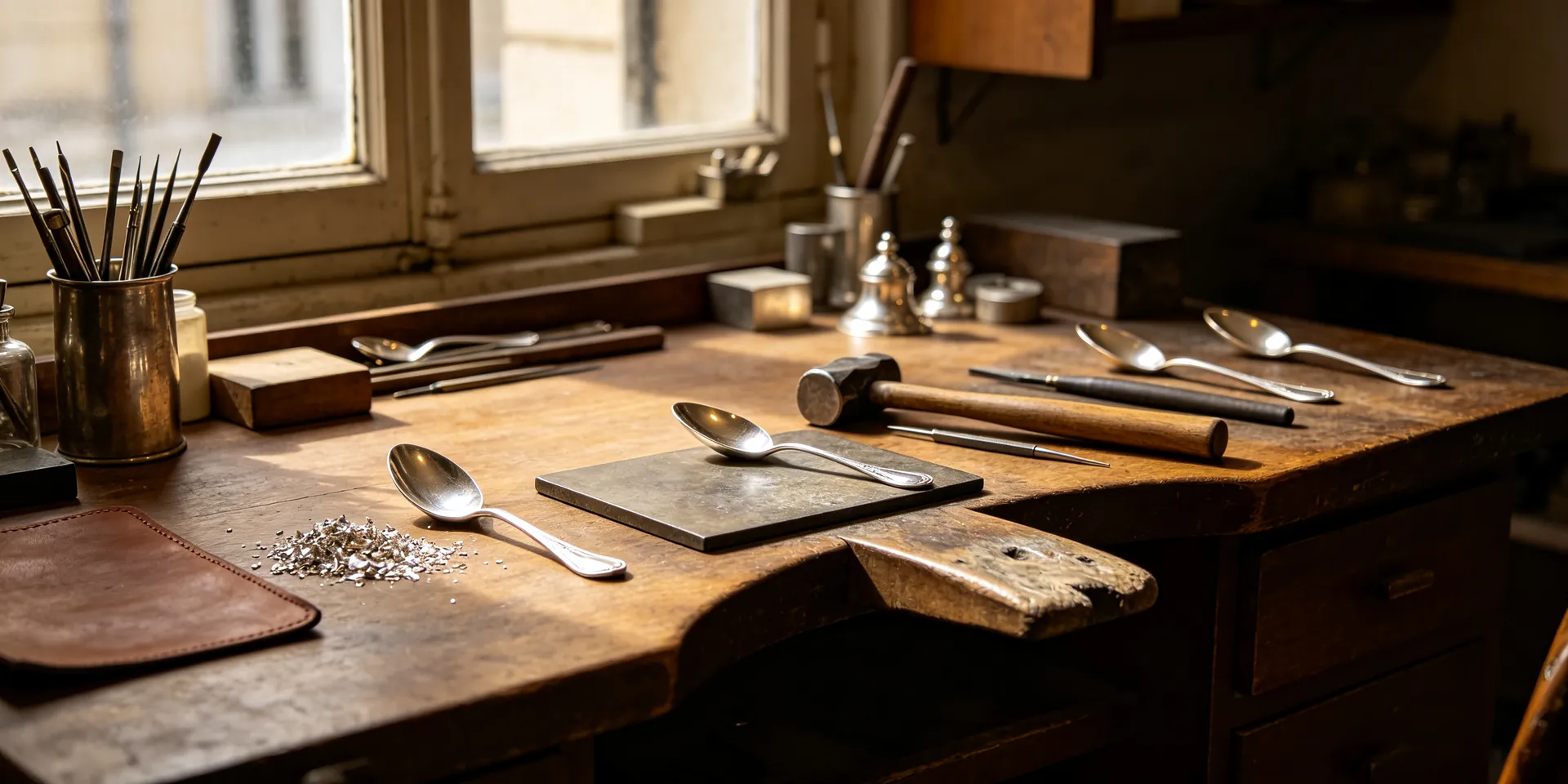
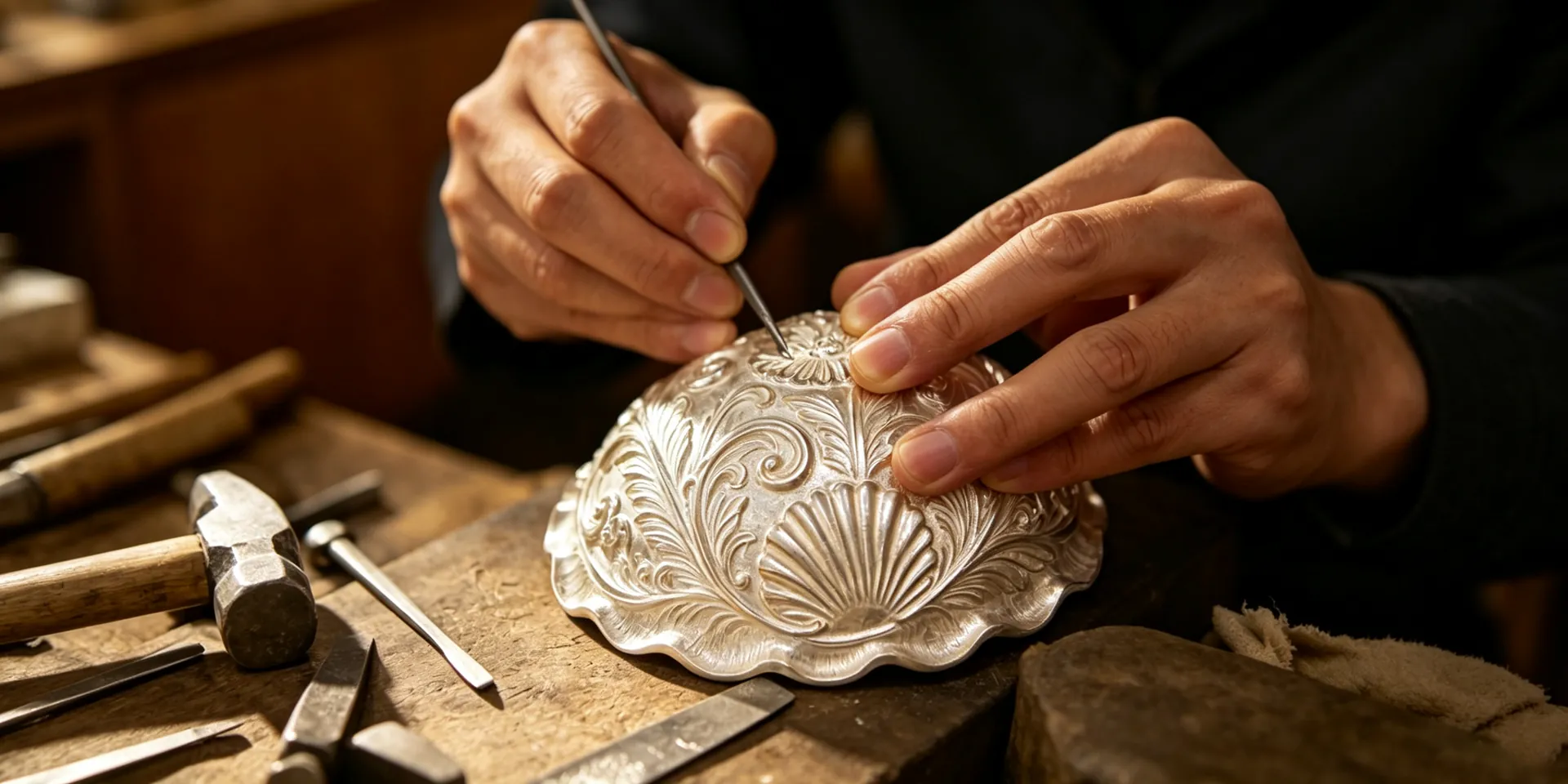
LOUISSANKA’s brand aesthetic identity originated in a quiet silversmith’s atelier on the outskirts of Paris. Afternoon sunlight streamed through tall windows and settled gently on a silver spoon being polished by an apprentice. The fleeting interplay of light and warm metal sowed the earliest seed for the brand’s artistic philosophy. From an early age, the founder studied classical European silversmithing. Over two decades of hands-on practice, he mastered every nuance of traditional metal craftsmanship. In classical Europe, silver was an exclusive table and household symbol for royalty and nobility. Boasting soft, restrained luster and rich, delicate texture, it embodied the era’s pursuit of elegance, dignity and ritual in daily life. During decades of handcrafting, he refined classic motifs such as foliate scrolls and shell-shaped rims, developing an acute command of silhouette, texture layers and light proportion. He always upheld the craftsman’s creed: respect materials and pursue perfection.
Years dedicated to classical silversmithing allowed him to fully grasp silver’s unique aesthetic value. Hand forging lends each piece irreproducible human warmth, while vintage forms carry profound classical charm. Even so, he clearly recognized the inherent limitations of this craft. Silverwork involves elaborate procedures and rigid stylistic conventions, deeply tied to court aesthetics. It struggles to fit the minimalist, uncluttered atmosphere of contemporary urban spaces and fails to align with modern people’s preference for restrained luxury. Though classical silverware boasts rich heritage, it falls short in everyday practicality and versatile application. He long sought to break the boundaries of traditional craftsmanship, searching for a creative path that preserves artisan integrity while resonating with modern taste.
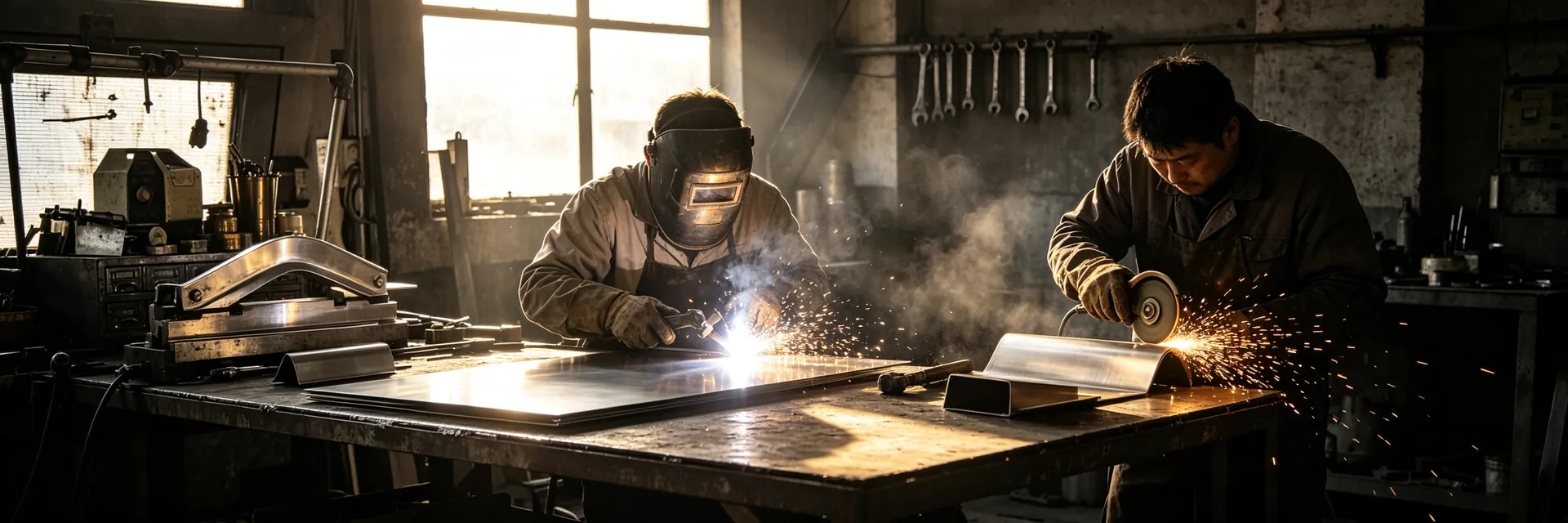
Before meeting the silversmith, Wogozen devoted himself to contemporary art creation and spatial aesthetics. With years of experience in modern sculpture, high-end soft furnishing and premium interior design, he focused on transforming industrial materials into artistic works and built a forward-thinking design system rooted in contemporary aesthetics. Among diverse modern materials, stainless steel captivated him. Unlike the fragile transparency of glass and lightweight feel of aluminum, stainless steel features a solid base, pristine mirror finish and crisp lines. Stripped of superfluous ornamentation, it perfectly embodies the core ethos of modern design: simplification.
A highly adaptable medium for modern art, stainless steel captures ambient light and color, generating dynamic visual shifts as surroundings change. Crisp and compelling, it suits a wide range of contemporary luxury spaces. Wogozen observed that stainless steel has been widely adopted in landmark architecture, modern sculpture and bespoke interior projects. Yet the industry bears a fundamental contradiction: mass-produced stainless steel goods prioritize cost reduction and output. Uniform shapes, sloppy workmanship and careless details prevail. Mass manufacturing strips stainless steel of its artistic expression and human texture. This material with immense creative potential has been reduced to ordinary commodities, its superior artistic capacity overlooked.
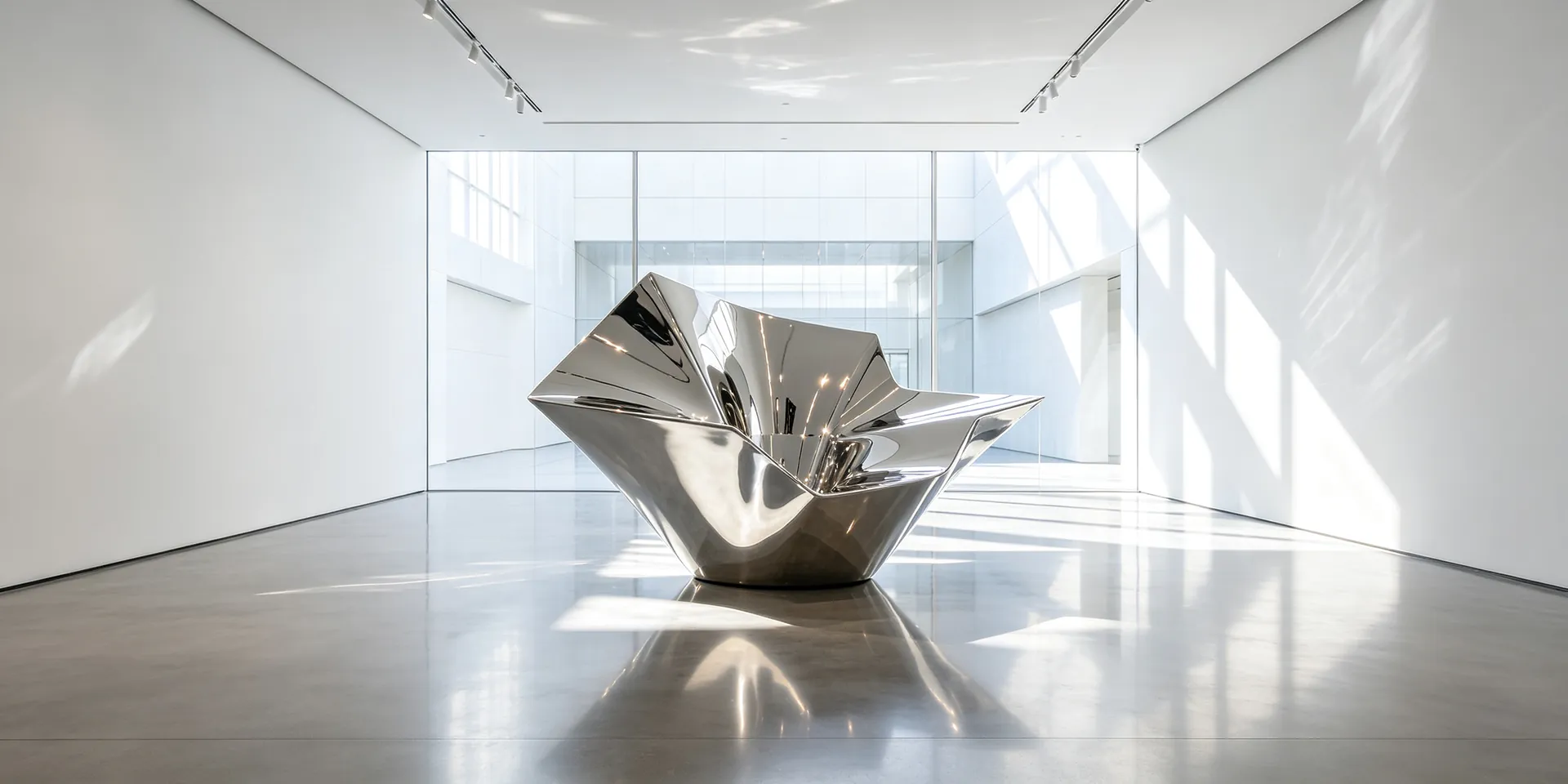
By chance, the two creators from separate aesthetic realms crossed paths and embarked on in-depth conversations about material innovation, craft integration and the aesthetics of their times. One carried profound classical craftsmanship heritage, the other specialized in modern artistic innovation. Their divergent creative backgrounds sparked inspiring exchanges and mutual learning. The founder shared the essence of silversmith craft: the value of a traditional artifact lies not merely in precious metal, but in countless hours of hand carving, rigorous detail control, and generational craftsmen’s reverence and human sentiment — qualities mass production can never replicate. Drawing on his experience working with modern materials, Wogozen offered a fresh interpretation of stainless steel. Far from being a cold industrial raw material, it is an underappreciated medium for modern art. Its structural stability supports bold, minimalist sculptural forms; its mirrored surface enables dynamic interaction between objects and ambient light; its quiet metallic character fits casual residential settings as well as sophisticated commercial venues, luxury hotels and art galleries.
Through ongoing discussion, they reached a consensus. The mediocre appearance of common stainless steelware stems not from limits of the material itself, but from inadequate craft standards and weak aesthetic design. If the exacting workmanship, meticulous hand-finishing and craftsman reverence applied to silverwork could be transferred to stainless steel creation, retaining its sharp, pioneering modern character while infusing subtle texture and human depth, the material could escape the definition of ordinary tableware. The result would be modern artistic pieces balancing functionality, visual appeal and collectible value. They believed the quiet grace of classical silver and the sharp sophistication of stainless steel represent aesthetic expressions from two distinct eras, complementary to one another. Together, they fill a gap in the luxury market, where trendy designs often lack heritage and textured goods lack artisan soul.
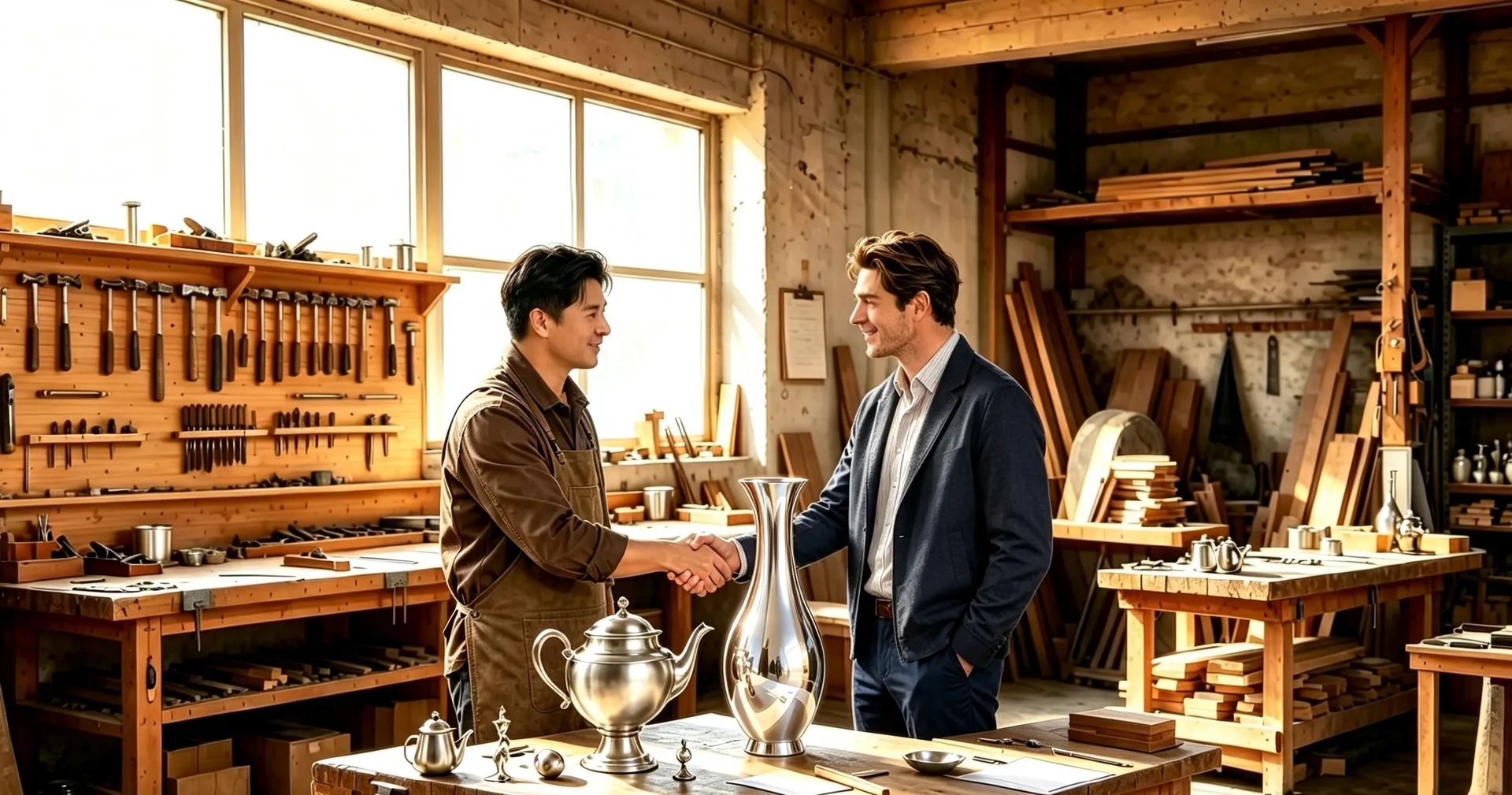
This aesthetic epiphany helped both men identify shared industry struggles and define their creative mission. Each material category was trapped by its own constraints. Classical silverware was confined by vintage styling, limited in aesthetic range and application scenarios, making it hard to integrate into modern daily life. Mass-produced stainless steel products, constrained by industrial mindsets, prioritized basic utility over artistic identity and handcrafted quality, remaining stuck in the low-end commodity bracket. To break these dual limitations, they resolved to step outside conventional creative paths. Neither would indulge blindly in silver’s vintage nostalgia nor compromise with low-cost mass-produced stainless steel. They set out jointly on a creative route for luxury objects: classical craftsmanship as foundation, empowered by modern aesthetics. The two divided work logically, leveraging their respective strengths. With more than twenty years of metal processing experience, the founder oversaw all craft standards, surface texture and forming precision. He applied silversmith-grade finishing techniques to stainless steel, carefully controlling curves, surface texture and every fine detail. Wogozen led silhouette design, light-driven aesthetics and multi-scenario development. He infused works with clean, contemporary forms to unlock stainless steel’s full artistic potential, unifying material traits, craftsmanship and modern aesthetics.
United by aligned artistic ideals and complementary expertise, they co-founded LOUISSANKA, a modern luxury art brand, bridging classical craftsmanship and modern art across time. The brand established a unique dual-dimensional aesthetic identity. On one hand, it inherits the rigorous craftsmanship philosophy, precise technical standards and gentle humanistic core of traditional silversmithing, safeguarding the artisan spirit handed down from handcrafted ages. On the other hand, it explores stainless steel’s pure, crisp and powerful modern qualities, endowing works with pioneering, versatile high-end aesthetic attributes. Rejecting ostentatious decoration, LOUISSANKA focuses on the innate beauty of materials and fine craft details, infusing cold industrial metal with delicate texture and human warmth, and grounding age-old craftsmanship within contemporary luxury living.
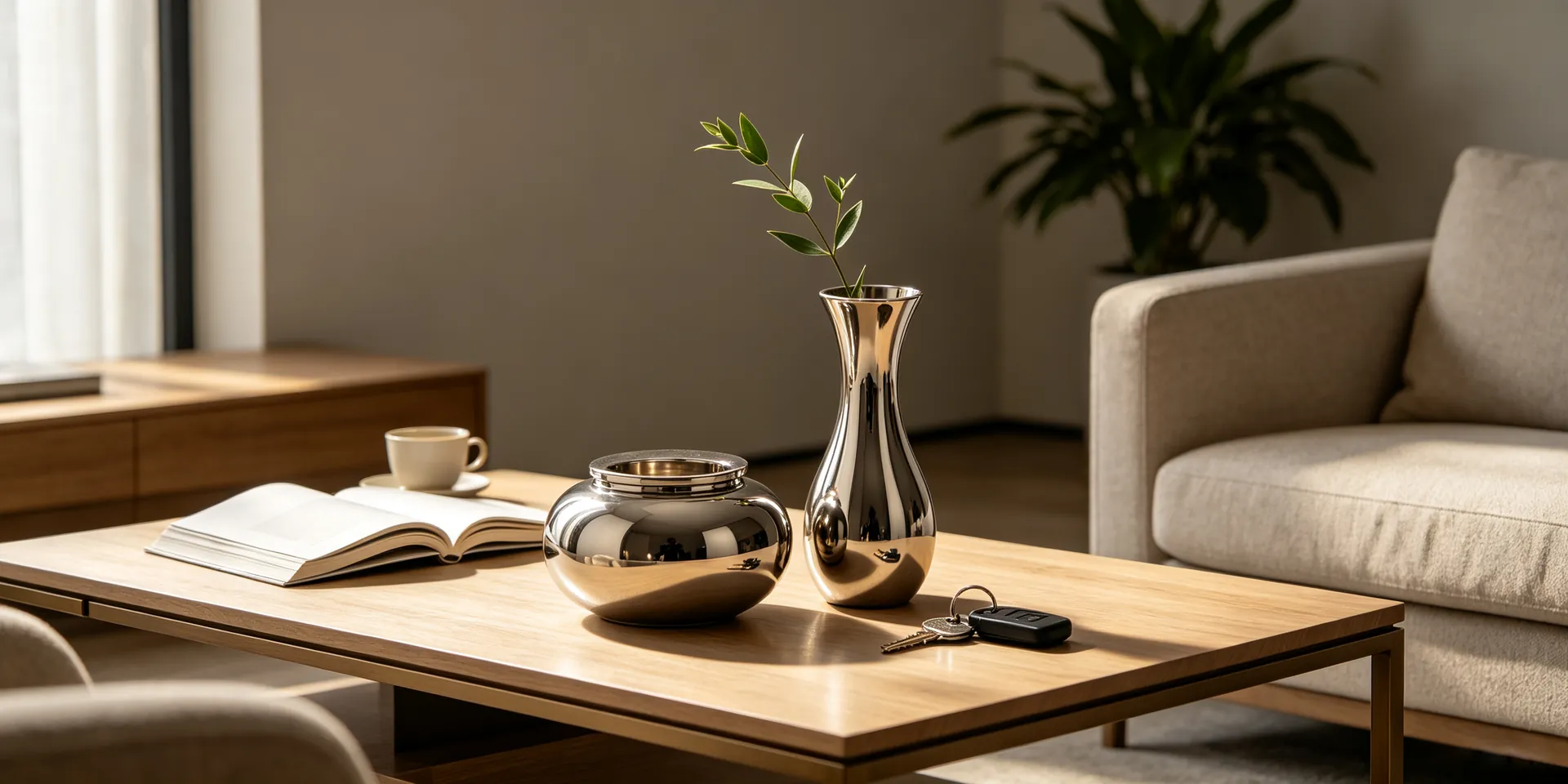
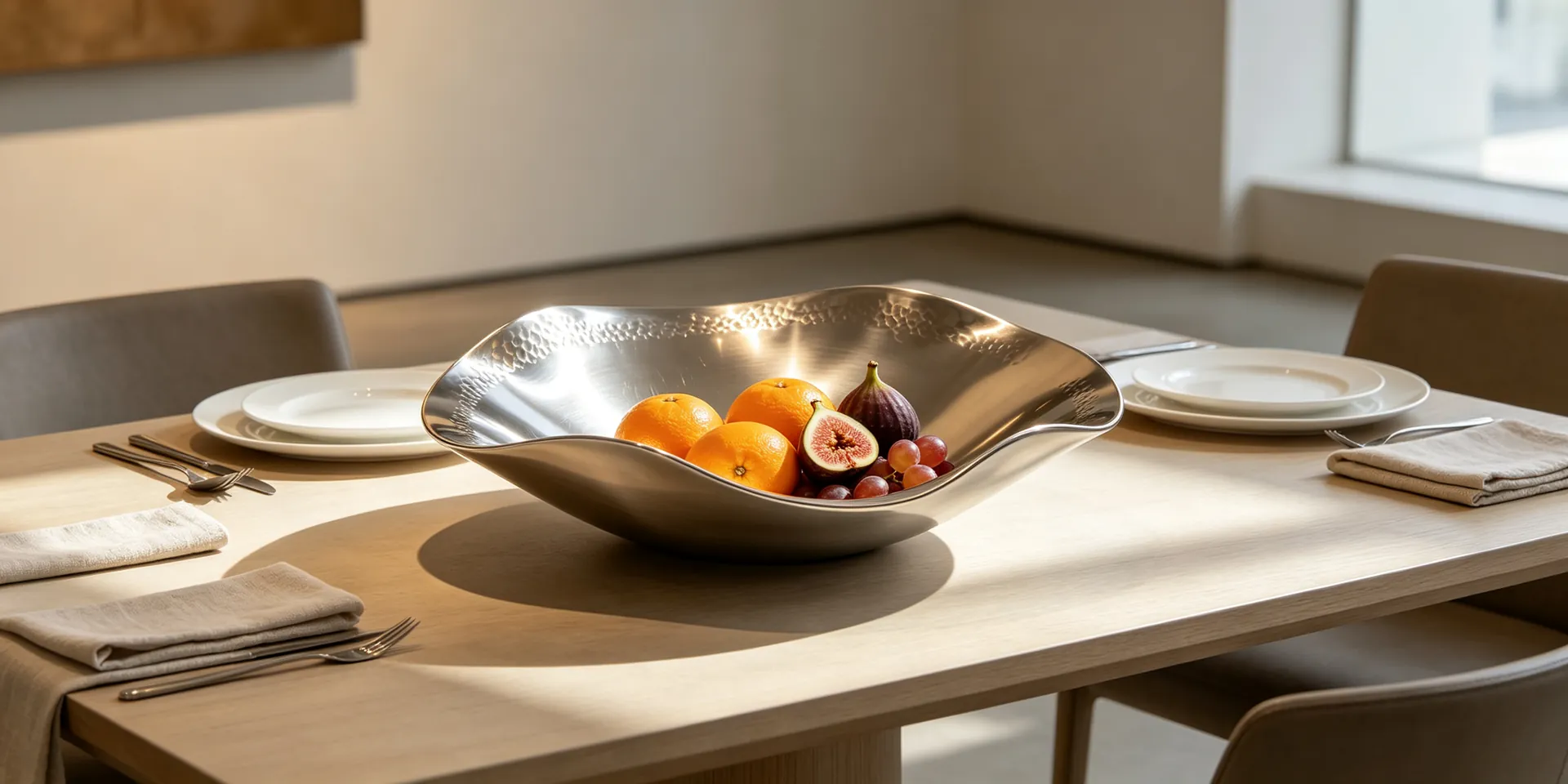
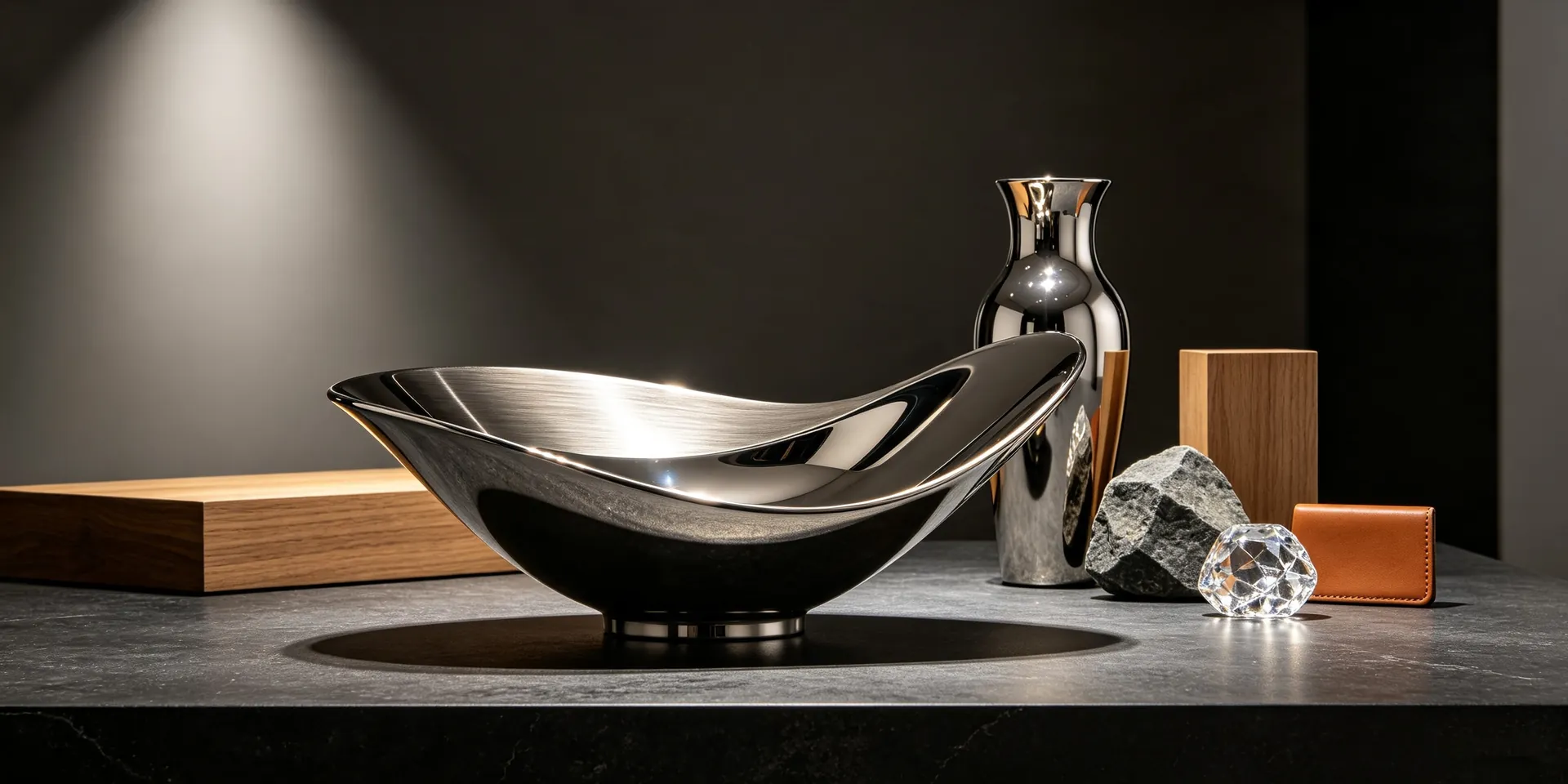
With this distinctive aesthetic that fuses past and present, LOUISSANKA redefines modern metal home art. It keeps time-honored craftsmanship alive in modern life and lets contemporary materials carry humanistic depth. Under LOUISSANKA’s hand, stainless steel is no longer just industrial raw material. It may take the soft elegant curve of a bowl on the dining table, or stand as a sculptural vase in the living room. When the vase holds no blooms, the piece itself is frozen light in blossom.
The works adopt AISI 304 stainless steel as their core structure, layered with diverse complementary materials to build depth. Wood brings warm tactility, stone conveys steadiness, crystal delivers transparency, leather offers warmth, and ceramic embodies understated simplicity. Each auxiliary material engages in quiet aesthetic dialogue with stainless steel.
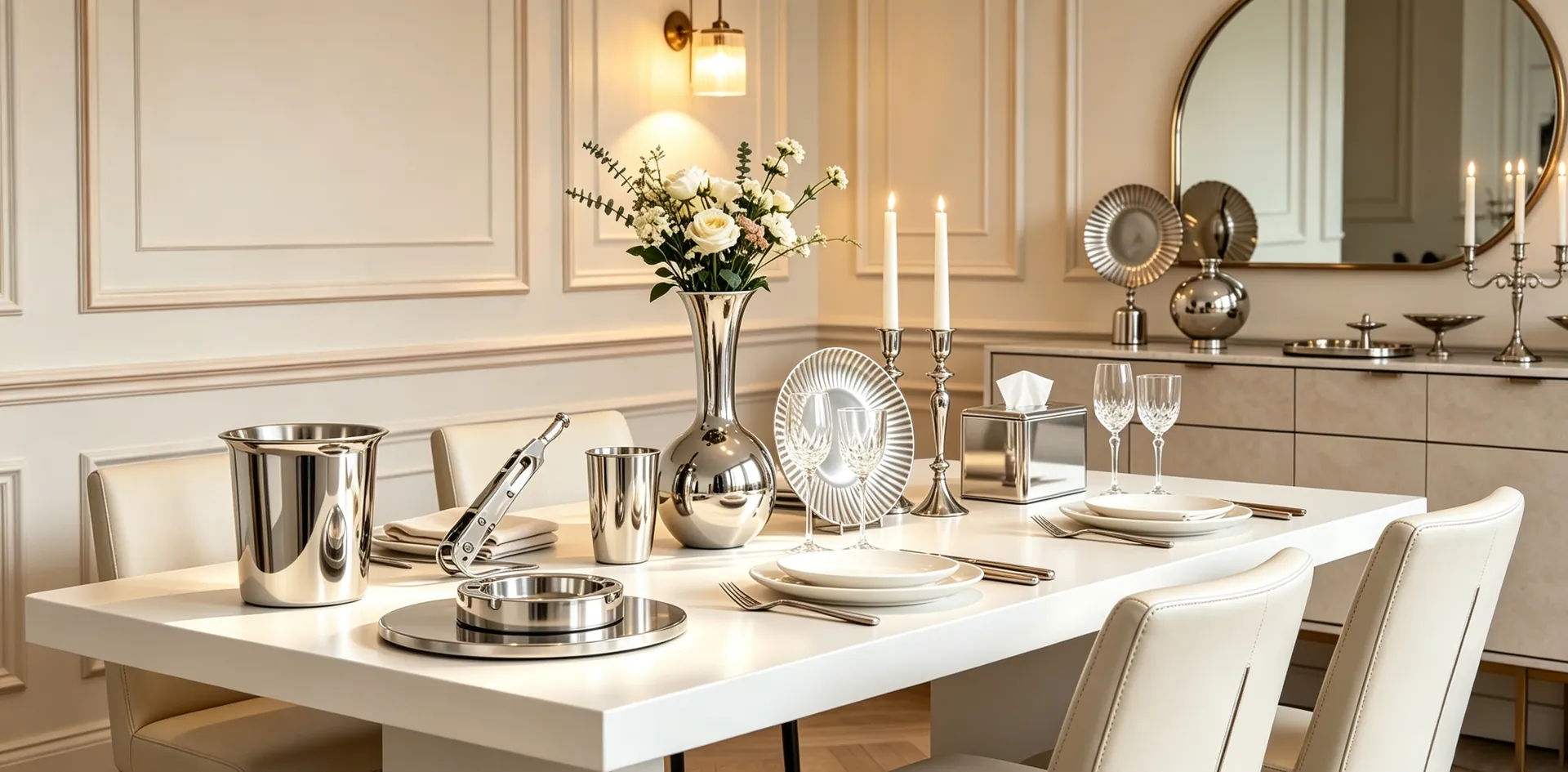
The brand’s creations fall into two expressive categories. One balances utility and aesthetics: fruit bowls, water cups and storage vessels hold food, fresh produce and sundries. When not in use, they rest quietly in a space, forming calm artistic scenery. The other prioritizes artistic exploration, defined by form. Shapes that defy visual balance, surprising mirror reflections and surfaces interacting continuously with light. Every piece bears distinct artistic character and independent collectible aesthetic value.
LOUISSANKA rejects the narrow view that “objects exist only for use”. A fine artifact possesses both a living function to serve daily use and a soul for contemplation. It invites touch and gaze. It serves everyday life yet refuses to be defined by it.
The name LOUISSANKA pays sincere tribute to the silver age, echoing the distant legacy of European classical art. Yet the brand does not replicate antique silverware. Instead, it extends the old silversmiths’ devotion to beauty, transplanting that reverence into the modern design language of stainless steel. It lets aesthetics from two metals and two eras converse endlessly across dinner plates, storage vessels and sculptural forms.
The beauty of silver resembles a rigorously structured classical sonnet. The beauty of stainless steel is like a sharp, free modern poem. Neither needs validation from the other; each shines on its own. LOUISSANKA is the maker standing at the boundary of tradition and modernity, writing both verses simultaneously.
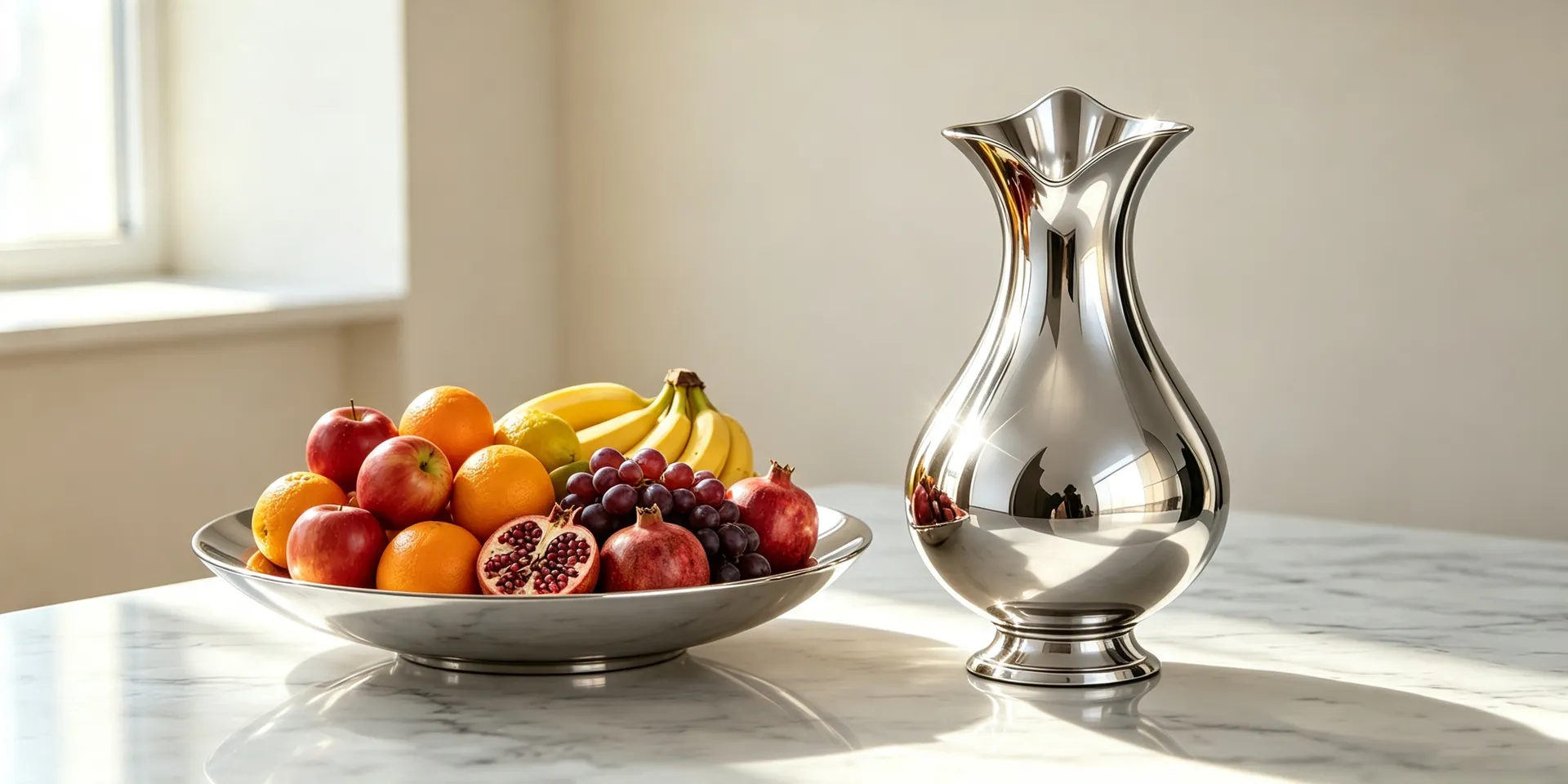
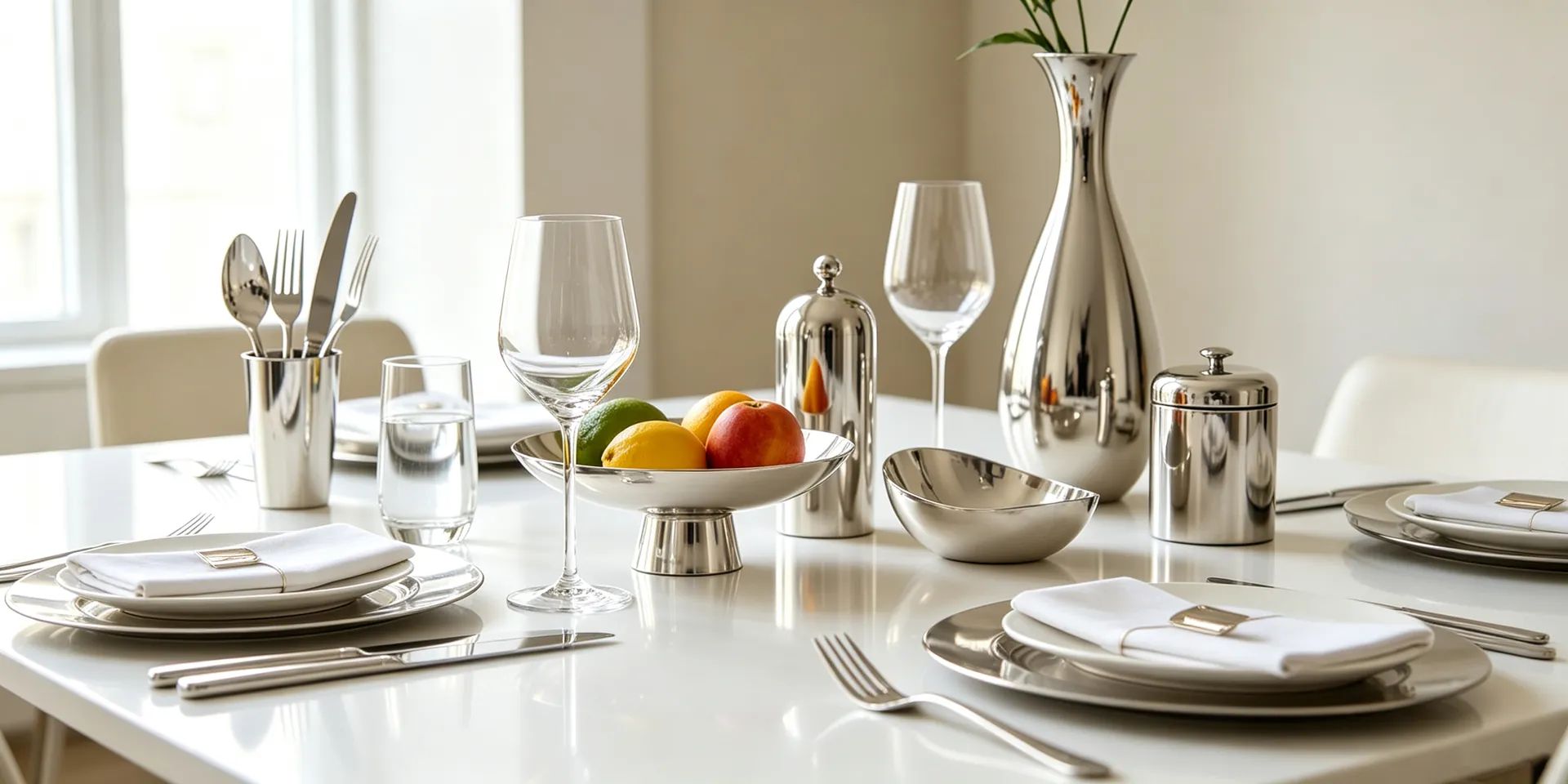
LOUISSANKA — Honoring the Silver Age through Modern Art.