In the long trajectory of European art, silverware occupies a uniquely distinctive position. Merging the inherent nobility of precious metals, the artistic value of meticulous handcraftsmanship, and the practicality of daily design, European silver art has evolved over millennia, embodying the continent’s religious transformations, royal transitions, humanistic awakenings, and aesthetic revolutions. Unlike paintings and sculptures confined to galleries and ceremonial spaces, silverware has long been integrated into religious rituals, aristocratic banquets, and ordinary domestic life, serving as a tangible, immersive chronicle of evolving cultural tastes. From the solemn divinity of the Middle Ages and the humanistic splendour of the Renaissance to the opulent dynamism of early modern periods and the restrained minimalism of the contemporary age, European silversmith art has refined its classical essence through successive stylistic renewals. Far from fading with the passage of time, this timeless aesthetic has been reimagined into a modern luxury art form tailored to contemporary lifestyles through material innovation and evolving design philosophies.
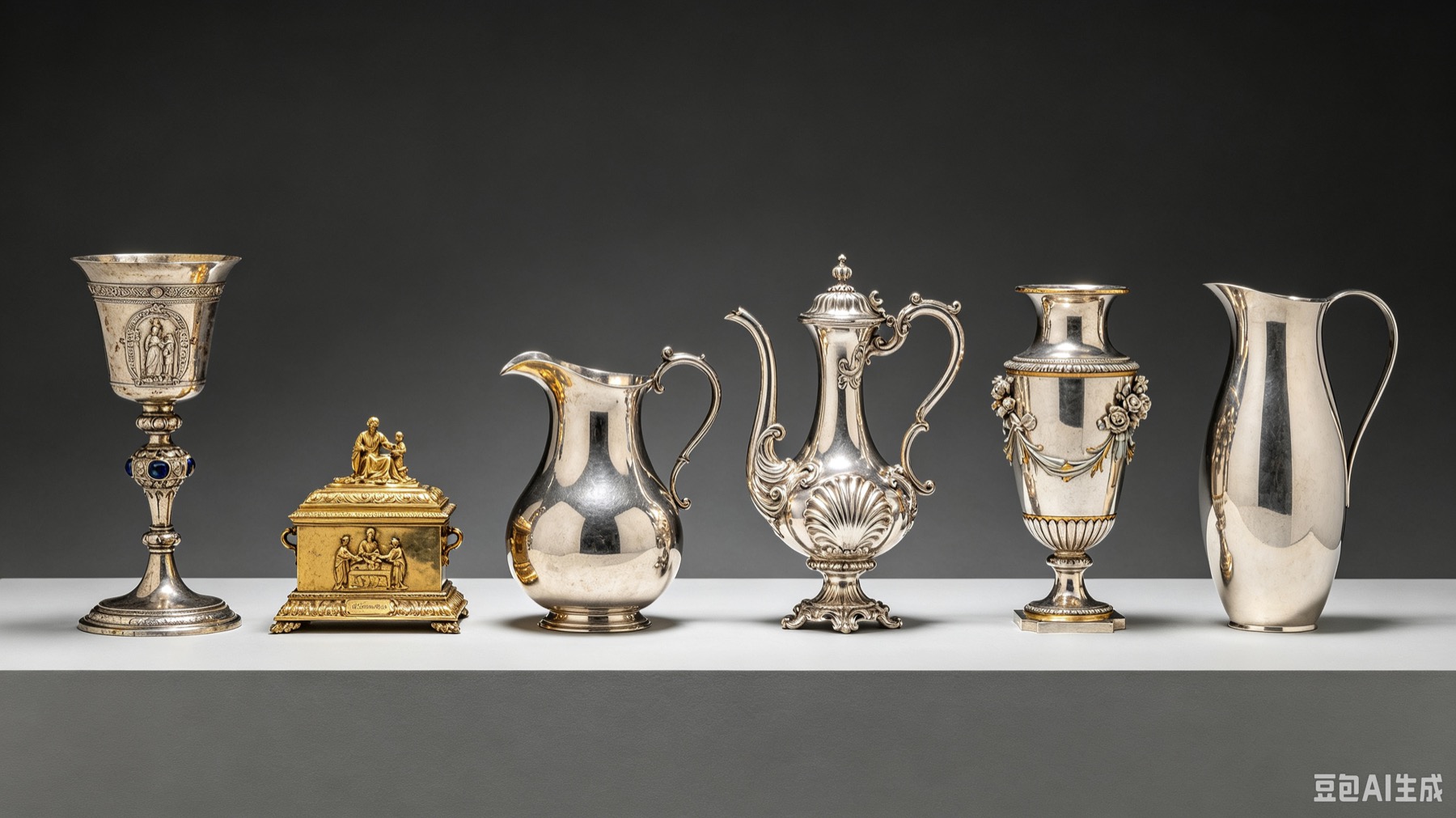
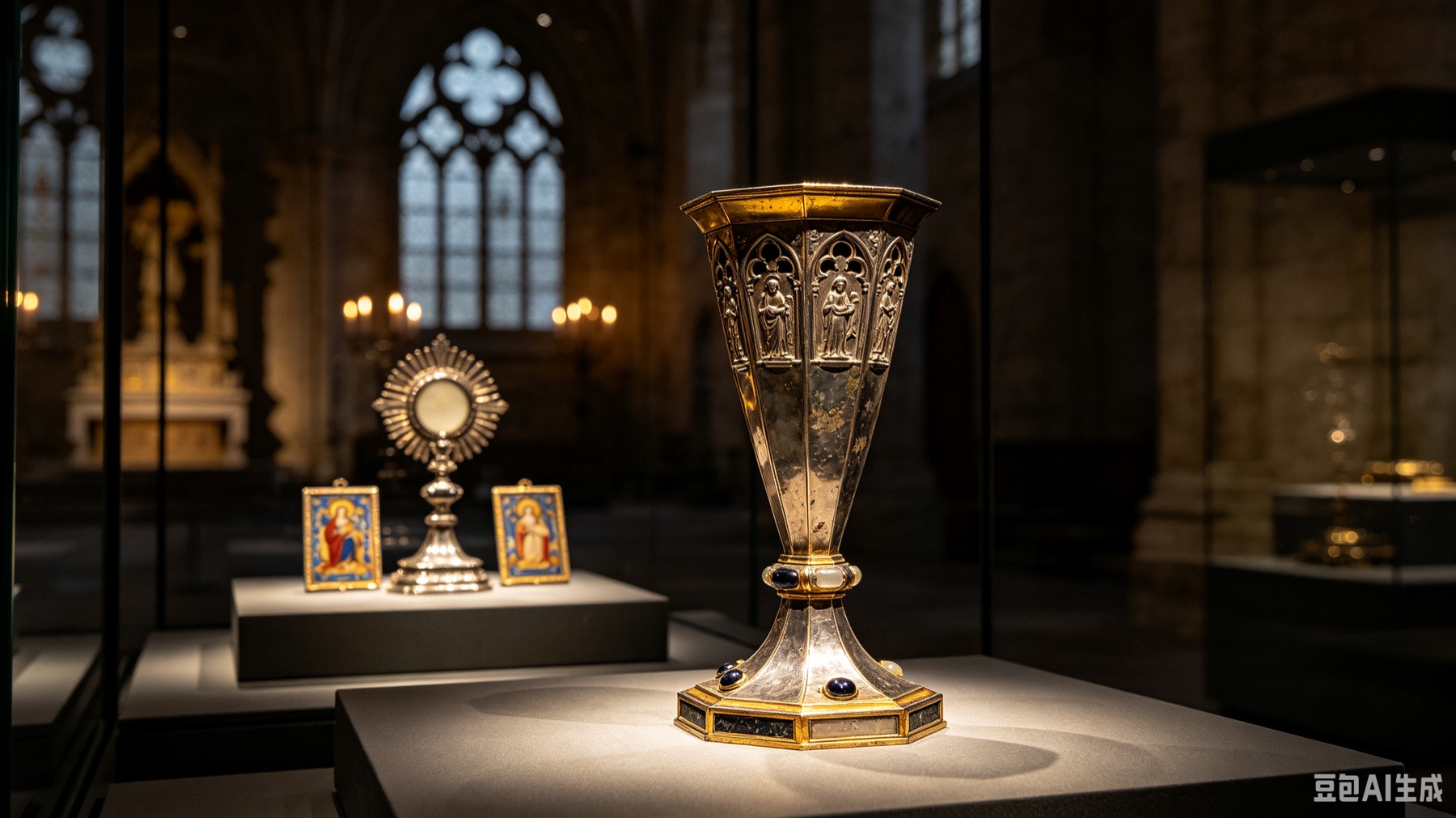
The Middle Ages laid the foundational framework for European silversmith art, a period when silverware was deeply intertwined with religious faith and served primarily as a sacred vessel for ecclesiastical ceremonies. Following the fall of the Western Roman Empire, religious institutions dominated European cultural life, limiting secular artistic development and emerging as the primary patrons and creators of silver craftsmanship. Nearly all silver pieces of this era were religious artefacts—altar chalices, reliquaries, crucifixes, and altar ornaments—devoid of mundane domestic functionality. Craftsmanship prioritised steady hammering and disciplined chasing, rejecting excessive ornamentation in favour of rigid vertical lines, symmetrical compositions, and sacred motifs including crosses, saintly portraits, and liturgical vines. The resulting works exuded austere solemnity and pure spiritual reverence. Meanwhile, the formation of medieval silversmith guilds standardised silver purity, manufacturing techniques, and artisan qualifications. The iconic British Sterling 925 silver standard was established during this period, a benchmark still recognised globally today. This institutionalised system solidified the standardisation of European silver art and embedded its core attributes of purity, nobility, and refinement within Western aesthetic tradition.
The Renaissance (14th–16th centuries) revolutionised European silversmith art, liberating it from divine symbolism to embrace humanistic values and ushering in its first golden age. Massive silver imports from the New World provided abundant raw materials, while prevailing humanistic ideology freed craftsmen from centuries of religious artistic constraints, drawing inspiration from the classical aesthetics of ancient Greece and Rome. Silverware stepped out of church sanctuaries and became a coveted artistic treasure of European elites in cultural hubs such as Florence, Venice, Augsburg, and Nuremberg. Artisans integrated classical mythologies, natural florals, and human figurative elements into their designs, adopting elegant proportions and balanced compositions inspired by ancient Roman urns and aristocratic banquet vessels. Craftsmanship reached its pre-modern peak, combining intricate chasing, high-relief carving, layered openwork, enamel inlay, and gemstone embellishment to transform functional silverware into sculptural collectibles of profound artistic value. The elite tradition of “cabinet of curiosities” elevated fine silverware to a core symbol of familial wealth, refined taste, and social status, marking its definitive transition from sacred ritual artefacts to secular artistic masterpieces.
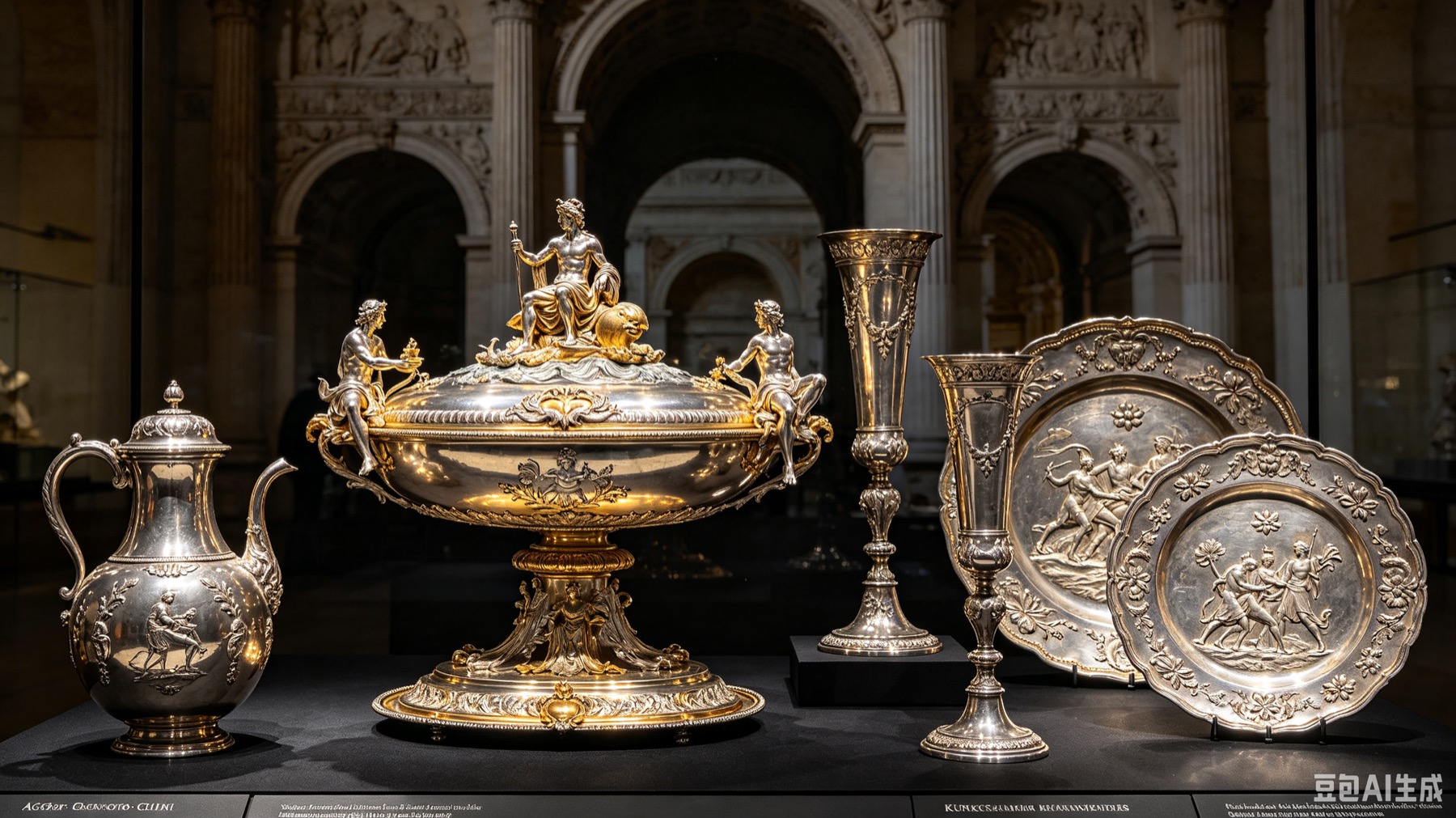
The Baroque era of the 17th century propelled European royal silver art to unprecedented opulence. Fueled by the rise of absolute monarchies and Counter-Reformation movements, the period favoured grand, dramatic, and visually striking aesthetics. Baroque silverware abandoned the restrained elegance of Renaissance design, characterised by voluminous forms, dynamic lines, and dramatic tonal contrasts. Elaborate high-relief foliage, noble coat of arms, and epic mythological motifs created powerful visual impact. The court of Louis XIV of France championed monumental custom silver sets, including oversized banquet trays and ornate fountain pitchers, embodying imperial authority and regal magnificence. The innovative Dutch auricular style further redefined conventions with fluid, organic textures that broke traditional geometric rigidity, representing a landmark breakthrough in artistic expression. Tragically, most supreme royal silver pieces of this era were melted down for currency amid wars and regime changes, making surviving Baroque artefacts exceedingly rare and their grand aesthetic legacy all the more precious.
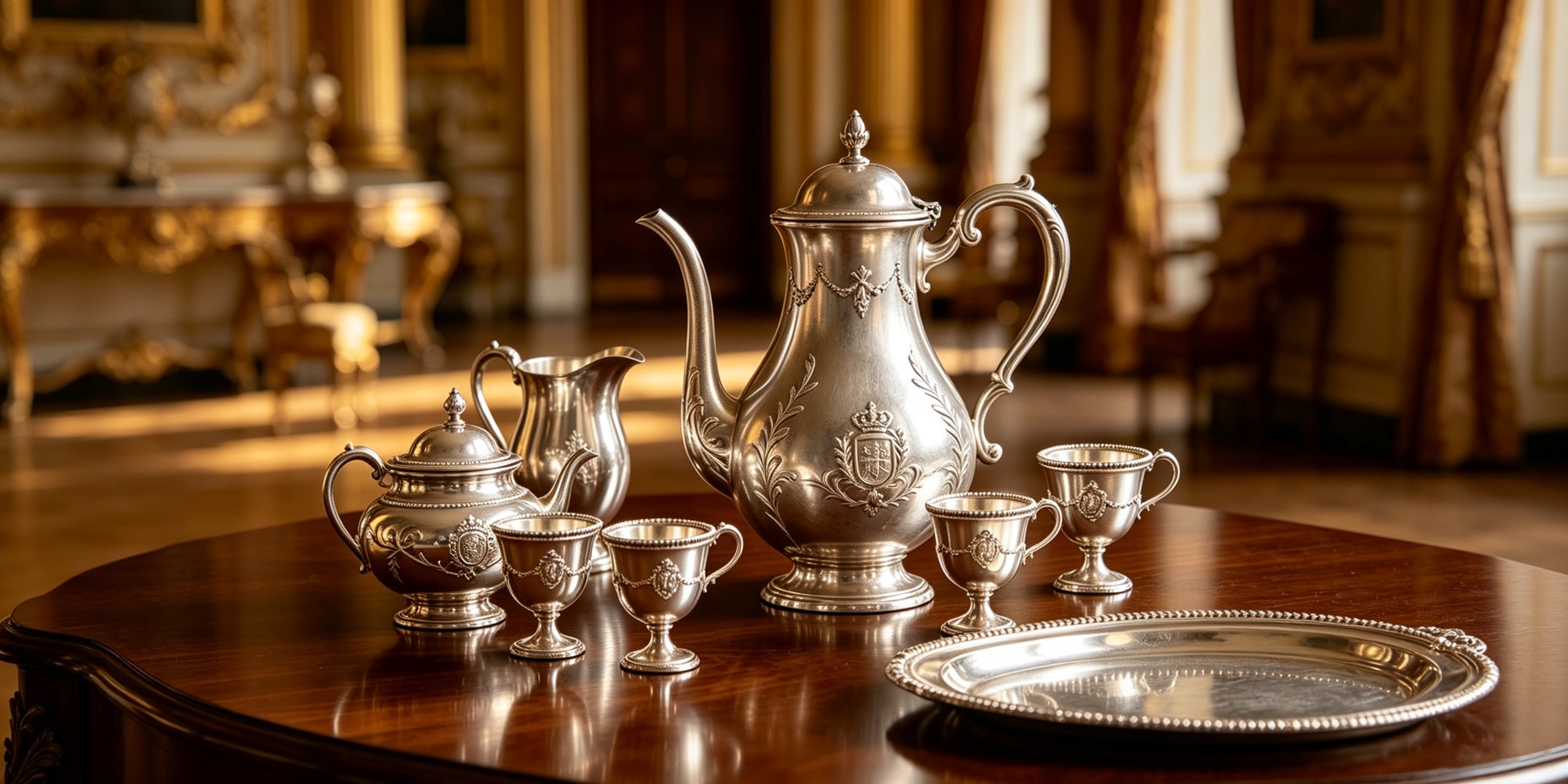
The 18th century witnessed a pivotal aesthetic transition through the Rococo and Neoclassical movements, evolving silver design from extravagant complexity to delicate grace and rational restraint. Replacing Baroque heaviness, Rococo embraced lightness and fluidity, abandoning strict symmetry for graceful S-curves and C-curves adorned with shell, rock, and delicate floral motifs. Classic pieces such as pear-shaped coffee pots, openwork silver baskets, and lace-trimmed trays defined the era’s soft, romantic elegance, further enriched by exotic Chinese-inspired elements that infused European silver art with subtle Eastern subtlety. In the latter half of the 18th century, archaeological excavations of Pompeii and Herculaneum sparked a widespread classical revival, giving rise to Neoclassicism. Rejecting Rococo’s trivial ornamentation, artisans returned to the clean symmetry of Greek and Roman design, adopting linear geometries, simplified forms, and understated low-relief foliage. This restrained, sophisticated aesthetic stripped away royal extravagance and established the core prototype of modern luxury minimalism. Concurrently, British Georgian silver craftsmanship and hallmark systems matured completely, with dedicated marks for city origin, artisan identity, and production year, forming a rigorous, traceable artistic and craft system.

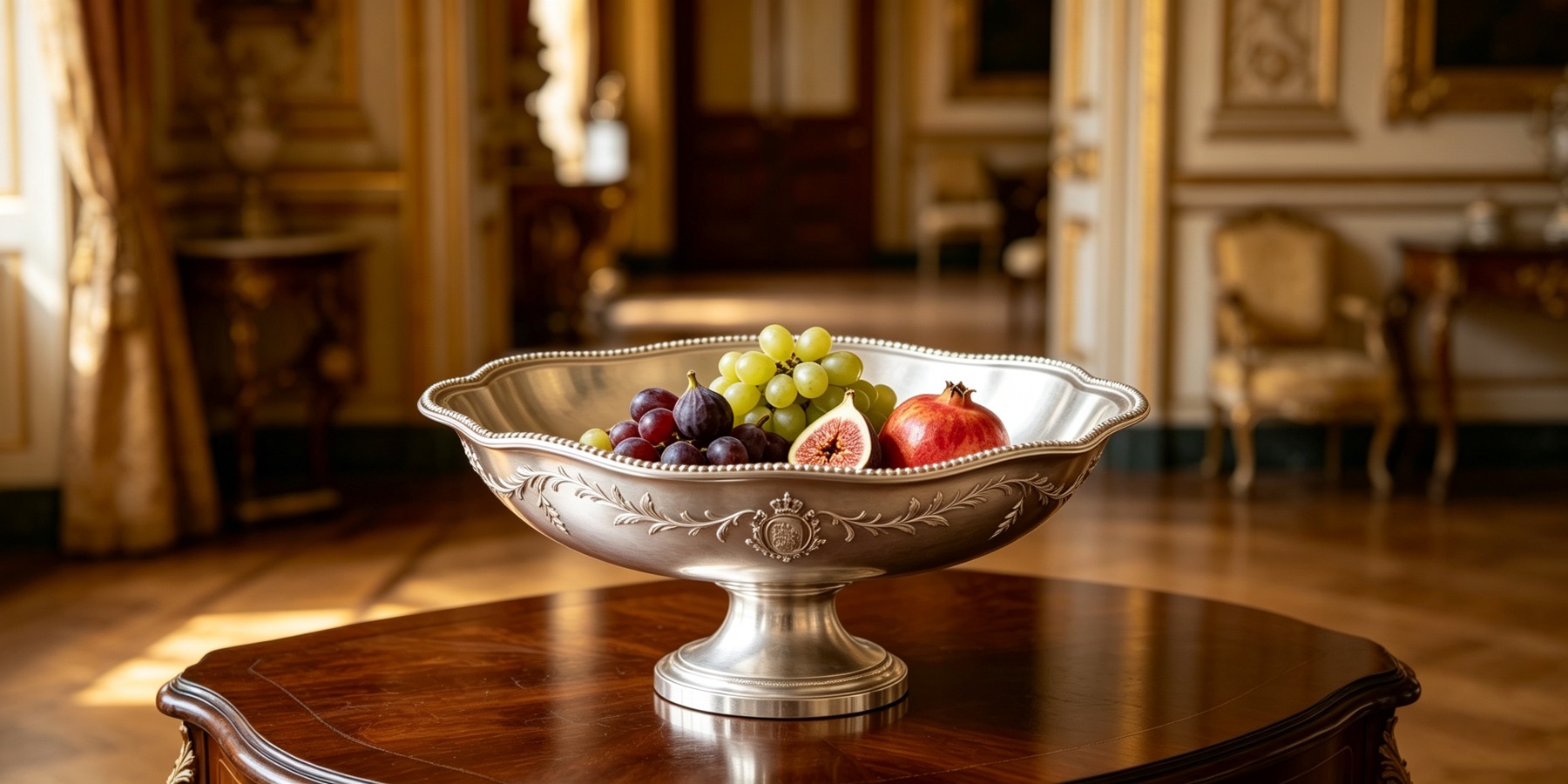
The Industrial Revolution of the 19th century democratised silver art and initiated an era of eclectic retro aesthetics. The invention of electroplating overcame the limitations of high cost and low output inherent to pure silver, making silver-style tableware accessible to the middle class and popularising elite silver aesthetics among the general public. The Victorian era embraced eclecticism, reviving and integrating Gothic, Renaissance, and Rococo styles to create diverse, richly ornamented works. Simultaneously, the Arts and Crafts Movement emerged to oppose the superficiality of industrial mass production, advocating handcrafted texture, natural simplicity, and minimal decoration focused on material authenticity—laying the groundwork for modern minimalist silver aesthetics. In the early 20th century, the Art Nouveau movement broke free from retro traditions, adopting organic botanical vines, insect motifs, and fluid natural curves to craft matte, textured artistic silverware, laying the foundation for modern silver art through iconic designers such as Georg Jensen. The subsequent Art Deco movement completed the full modernisation of silver design, replacing organic curves with crisp geometric shapes, symmetrical lines, and streamlined minimalism. Combined with mixed-media contrasts of silver, crystal, and timber, it forged the sharp, sophisticated contemporary luxury aesthetic that definitively ended the millennia-long tradition of ornate classical design.
Over thousands of years of evolution, European silversmith art has traversed sacred medieval ritual ware, opulent royal treasures, and restrained modern artistic pieces. Yet its core pursuit of premium material texture, exquisite craftsmanship, and humanistic aesthetics has remained unchanged. Nevertheless, traditional pure silver pieces suffer from inherent limitations: high cost, easy oxidation, difficult maintenance, and poor practicality, rendering them incompatible with modern living rhythms and contemporary domestic spaces. The millennia-old silver aesthetic thus calls for urgent modern transformation.
Against this backdrop, the contemporary luxury art brand LOUISSANKA inherits the lineage of European classical silversmith art, adhering firmly to the design philosophy of modernising classical silver aesthetics. Taking stainless steel as an innovative medium, the brand reinvents contemporary metallic luxury art. Rather than merely replicating classical silhouettes, LOUISSANKA distils the timeless essence of European silver art—refined proportional harmony, sophisticated blank-space design, and delicate textural subtlety—while eliminating redundant traditional ornamentation. Leveraging advanced modern precision craftsmanship, stainless steel’s inherent advantages of oxidation resistance, durability, and low maintenance perfectly compensate for the practical flaws of pure silver, enabling classical artistic aesthetics to adapt to modern daily use.
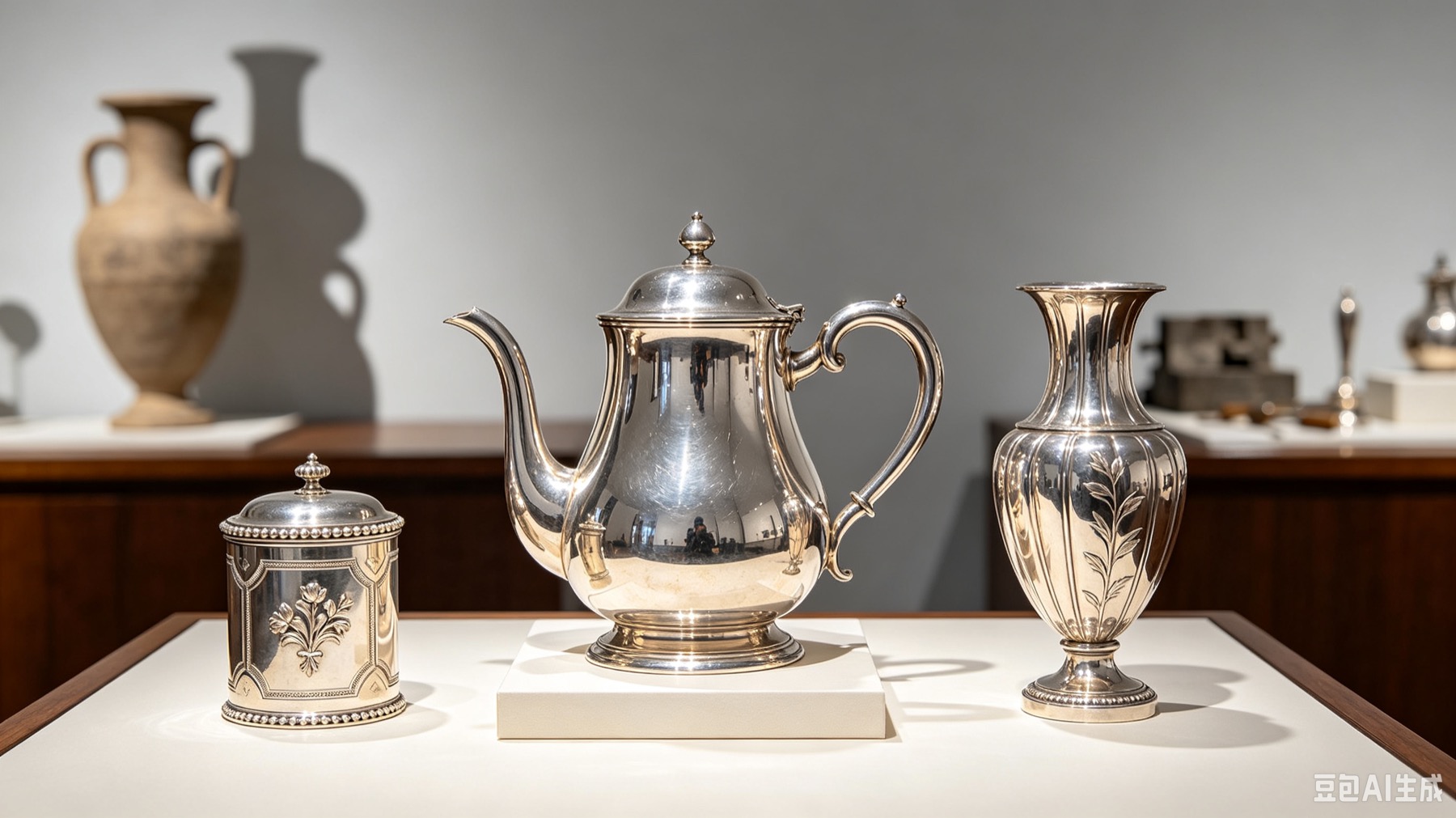
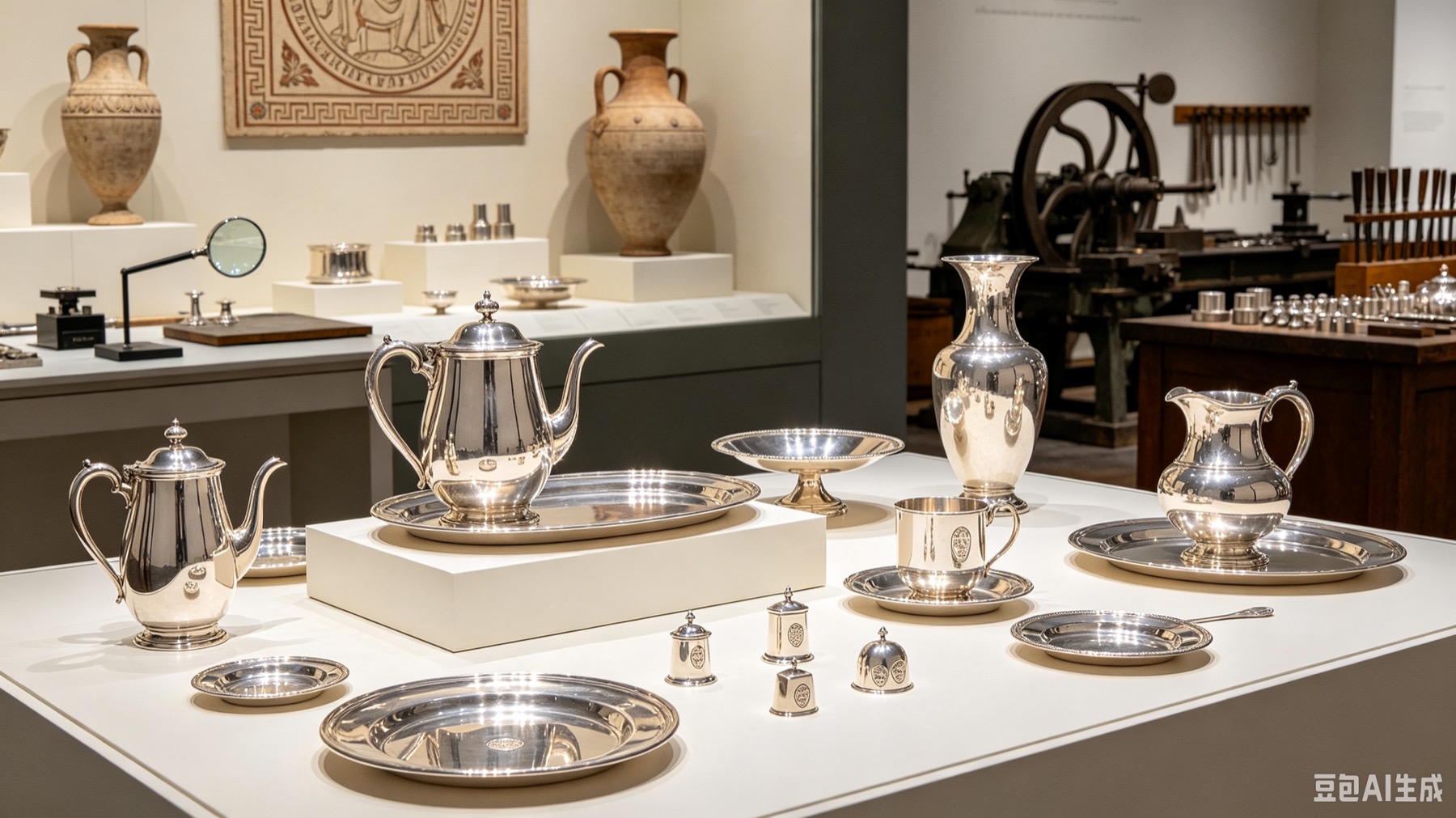
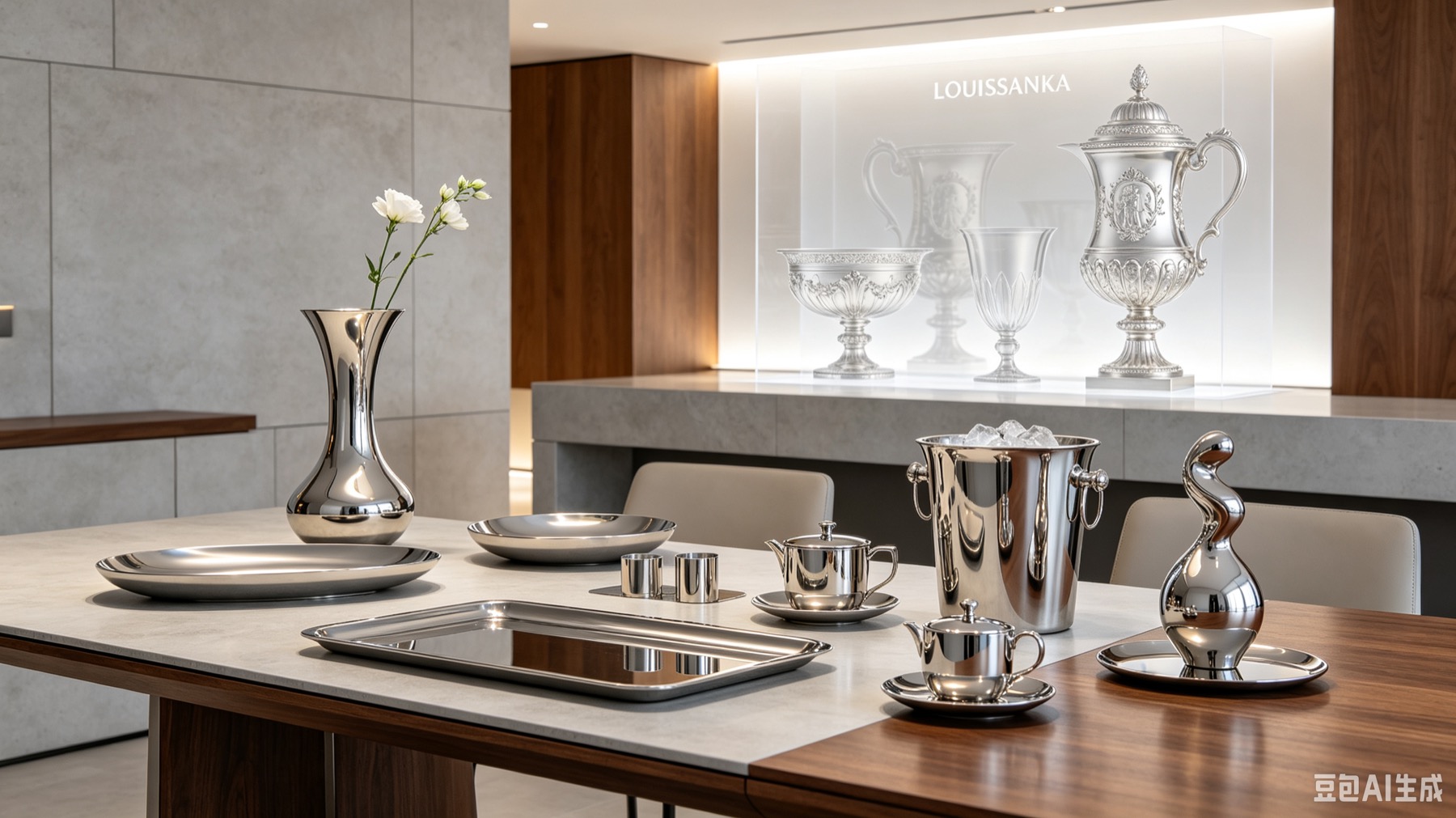
Timeless classical aesthetics never fade; they are merely reborn in new forms. Bridging the millennial artistic heritage of European silver craft and contemporary minimalist taste, LOUISSANKA resurrects museum-level classical silver aesthetics and integrates them into modern residential spaces. Through the fusion of retro classical essence and modern minimalist innovation, the brand sustains the vitality of contemporary metallic luxury art, fulfils the modern renewal of classical aesthetics, and redefines the understated luxury texture of modern life.
